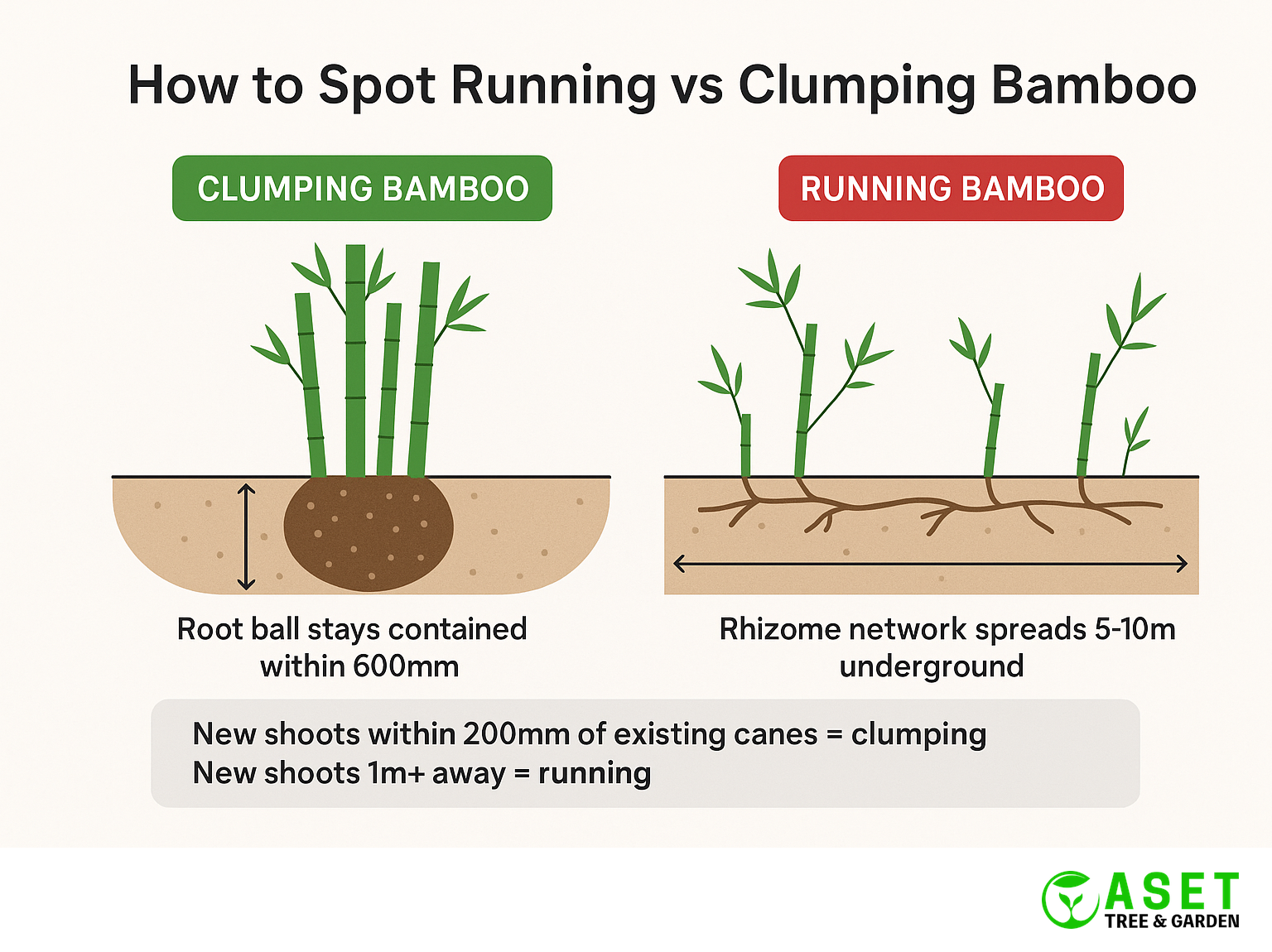
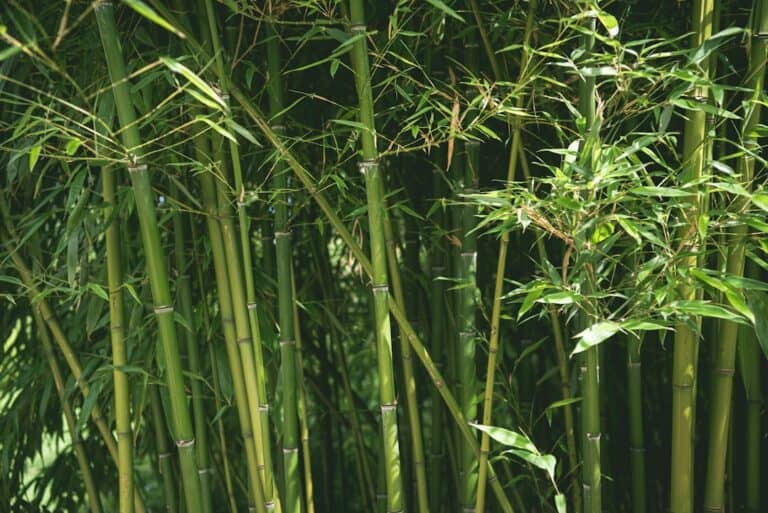
How clumping and running bamboo differ underground.
A homeowner ringing us about bamboo almost always opens with the same line: “It just keeps coming back.” That sentence is the running-bamboo tell, and it’s a useful one — because everything that happens next, from the treatment timeline to the cost to the relationship with the neighbour over the back fence, depends on whether the bamboo on your property is running bamboo or clumping bamboo. Most homeowners can’t tell the two apart. This guide walks through the visual signs, the underground biology, and the simple tests you can do in five minutes to know which one you’re dealing with.
Stand in front of the plant and walk around it. Look for new shoots emerging from the ground (the canes, not the leaves above).
Within 200mm of existing canes? Clumping.
1m+ from any existing cane? Running.
Through paving or in the middle of a lawn? Running, almost certainly.
Forming a dense clustered base? Clumping.
Every bamboo plant on earth falls into one of two categories based on how its underground rhizomes grow. Rhizomes are specialised underground stems — they look a bit like long thin roots but they’re actually horizontal stem tissue with the ability to send up new shoots wherever they break the surface.
Running bamboo (botanically, the leptomorph type) sends its rhizomes long distances laterally. A single Phyllostachys plant can extend new rhizomes several metres in a single growing season, and each rhizome stays viable for years. The visible plant might be in one corner of your garden but the underground network can be exploring under your lawn, into your neighbour’s yard, and along the path of least resistance through your soil.
Clumping bamboo (the pachymorph type) keeps its rhizomes close to the parent plant. New rhizomes branch off the existing ones but they curve back toward the cluster rather than running out into the open ground. The clump expands at most a few centimetres per year. It stays where you planted it.
That single difference in rhizome behaviour is the whole story. Every other contrast between running and clumping bamboo — the spread pattern, the removal cost, the chance of crossing onto a neighbour’s property, the chance of structural damage — flows directly from it.
What Our Sydney Customers Say
Quoted for 100 metre's of hedging and removal of vegetation that had over grown onto a busy pedestrian footpath. The team at ASET were great, very professional, accommodating and friendly. Cleaned the site to perfection, did more then i expected, which was pleasant to see. Would highly recommend the ASET team and will definitely hire again for the next project.
read moreread less
Jake Trivor
8/05/2024
×
Jake Trivor
8/05/2024
Quoted for 100 metre's of hedging and removal of vegetation that had over grown onto a busy pedestrian footpath. The team at ASET were great, very professional, accommodating and friendly. Cleaned the site to perfection, did more then i expected, which was pleasant to see. Would highly recommend the ASET team and will definitely hire again for the next project.
From start to finish Ahmed And his team were extremely professional and extremely knowledgeable. We had some hedges trimmed down as they were too big to manage and my wife and I were very impressed with the work. Highly recommend to use ASET
read moreread less
Matthew Dawson
10/07/2025
×
Matthew Dawson
10/07/2025
From start to finish Ahmed And his team were extremely professional and extremely knowledgeable. We had some hedges trimmed down as they were too big to manage and my wife and I were very impressed with the work. Highly recommend to use ASET
Ahmad was very professional during quote and conduct of the job. He engaged with me at all stages to ensure the work was carried to out my requirements. Highly recommended.
read moreread less
Simon Harris
10/07/2025
×
Simon Harris
10/07/2025
Ahmad was very professional during quote and conduct of the job. He engaged with me at all stages to ensure the work was carried to out my requirements. Highly recommended.
I needed a yucca tree removed at my property in Pendle Hill and I am so glad I called ASET Tree Removal. From the very start, the experience was seamless. I was dealing with Amy and her team, who were incredibly professional, polite, and easy to communicate with. They made the entire process stress-free and provided a fair quote. The team did a fantastic job with the yucca removal including cleaning up perfectly. If you are looking for a reliable, hardworking, and friendly team for tree services, I cannot recommend ASET Tree Removal enough.
read moreread less
Joanne
12/18/2025
×
Joanne
12/18/2025
I needed a yucca tree removed at my property in Pendle Hill and I am so glad I called ASET Tree Removal. From the very start, the experience was seamless. I was dealing with Amy and her team, who were incredibly professional, polite, and easy to communicate with. They made the entire process stress-free and provided a fair quote. The team did a fantastic job with the yucca removal including cleaning up perfectly. If you are looking for a reliable, hardworking, and friendly team for tree services, I cannot recommend ASET Tree Removal enough.
ASET Tree Removal & Garden Rejuvenation did an amazing job of our whole complex’s multiple gardens. The whole team were friendly and professional, and Amy and Ahmed could not have been more accommodating. They communicated every step of the process and were happy to work with us to achieve a fantastic result that has lasted for months based on their recommendations. From quote to job completion, they were fantastic.
read moreread less
Lisa Santos
11/01/2024
×
Lisa Santos
11/01/2024
ASET Tree Removal & Garden Rejuvenation did an amazing job of our whole complex’s multiple gardens. The whole team were friendly and professional, and Amy and Ahmed could not have been more accommodating. They communicated every step of the process and were happy to work with us to achieve a fantastic result that has lasted for months based on their recommendations. From quote to job completion, they were fantastic.
I highly recommend ASET they gave our gardens the biggest face lift very happy with the job. I was completely impressed with their professionalism and customer service from start to finish. 10 Star
read moreread less
Yeet Pro
11/11/2024
×
Yeet Pro
11/11/2024
I highly recommend ASET they gave our gardens the biggest face lift very happy with the job. I was completely impressed with their professionalism and customer service from start to finish. 10 Star
Great team who does fantastic work. Came out to inspect, talked me through the work, kept me well informed during booking, before arriving and on the job. Very knowledgeable and professional. Job well done and easy recommendation. Will be retaining their services for ongoing work.
read moreread less
Kevin Tam
10/30/2025
×
Kevin Tam
10/30/2025
Great team who does fantastic work. Came out to inspect, talked me through the work, kept me well informed during booking, before arriving and on the job. Very knowledgeable and professional. Job well done and easy recommendation. Will be retaining their services for ongoing work.
A huge thank you to the ASET Team for looking after at every stage of taking care of my property. Very professional, punctual and honest. We look forward to using ASET in future and recommend their services to everyone looking for great work in bringing their property back to life! Thank you again.
read moreread less
Hussain Patel
11/01/2025
×
Hussain Patel
11/01/2025
A huge thank you to the ASET Team for looking after at every stage of taking care of my property. Very professional, punctual and honest. We look forward to using ASET in future and recommend their services to everyone looking for great work in bringing their property back to life! Thank you again.
Their service was fantastic from the first call to finishing the job. I needed 3 palm trees removed from my yard in Narellan Vale. I called and the customer service was very quick, polite, professional and helpful. I got the quote which was much cheaper than quoted elsewhere. They were able to come the next morning and did a great job removing the rubbish and tidying up. Highly recommend!
read moreread less
naomi gauld
1/23/2026
×
naomi gauld
1/23/2026
Their service was fantastic from the first call to finishing the job. I needed 3 palm trees removed from my yard in Narellan Vale. I called and the customer service was very quick, polite, professional and helpful. I got the quote which was much cheaper than quoted elsewhere. They were able to come the next morning and did a great job removing the rubbish and tidying up. Highly recommend!
The team were responsive and professional. Their quality of work was exceptional, thorough and suggestions were made while the original scope was being carried out that was extremely helpful. A detailed quote and scope of work was provided prior to commencement of the job.
read moreread less
Christina
12/23/2024
×
Christina
12/23/2024
The team were responsive and professional. Their quality of work was exceptional, thorough and suggestions were made while the original scope was being carried out that was extremely helpful. A detailed quote and scope of work was provided prior to commencement of the job.
Not sure what bamboo type you have?
Bring us a photo or let us walk your property. We’ll identify the species in 5 minutes and tell you whether it’s a $500 job or a $5,000 job — for free.
How to identify which one you have — five-minute test
The fastest way to tell what you’ve got is to look at where the new shoots are coming up.
Where are the new shoots? Take a photo of the bamboo from above, then walk around your garden and mark every spot where a new bamboo shoot is poking up. If the new shoots are all within 30cm of the parent clump, it’s clumping bamboo. If you find shoots a metre or more from the parent — under the lawn, along the fence line, in a garden bed on the other side of a path — it’s running.
What does the new shoot look like? Clumping bamboo shoots emerge thick and short, in a tight cluster, with very little vertical distance between them. Running bamboo shoots emerge thin and tall, individually, often metres apart, like soldiers scattered through the garden.
Pull back the mulch. If you can spot a rhizome on or just under the surface, look at its shape. A running bamboo rhizome is a long thin segmented stem, sometimes more than a metre long, that looks like it’s heading somewhere. A clumping bamboo rhizome is a short knobbly stem that branches outward but doesn’t travel.
Check the spacing of the visible canes. In a clumping bamboo, the canes pack close together — sometimes you can barely fit a finger between them. In a running bamboo, the canes stand more loosely, like trees in a sparse forest.
Look at the species, if known. If the bamboo was deliberately planted and you remember the species or have a tag, use this list: Phyllostachys aurea (Golden), Phyllostachys nigra (Black), Phyllostachys edulis (Moso) and most other Phyllostachys species are running. Bambusa textilis (Slender Weaver), Bambusa multiplex (Goldstripe and similar), Bambusa ventricosa (Buddha Belly) are clumping.
If two or more of those tests point to running bamboo, you’ve got running bamboo.
Quick Identification — Numbers Worth Knowing
<30cm
Clumping shoot spread
1 to 5 m
Running rhizome reach per year
~95%
Of Sydney bamboo problem calls = running
Why the running variety is the one that causes problems
“I needed a yucca tree removed at my property in Pendle Hill and I am so glad I called ASET Tree Removal. From the very start, the experience was seamless. I was dealing with Amy and her team, who were incredibly professional, polite, and easy to communicate with. They made the entire process stress-free and provided a fair quote.”
— Joanne, Pendle Hill · ★★★★★
The vast majority of bamboo removal calls in Sydney involve running bamboo. There’s a simple reason: clumping bamboo behaves itself. You plant it, it grows in a tight cluster, you can trim it, you can move it, you can let it go for years and it’ll still be in roughly the same patch of garden. Clumping bamboo doesn’t make the phone ring.
Running bamboo is the one that ends up in newspaper stories and neighbour disputes. The rhizome system explores aggressively underground for nutrients and water, and when it finds a soft path of least resistance — under a fence, beside a paving joint, around a pool surround — it follows that path. New shoots pop up wherever the rhizome surfaces. By the time most homeowners notice they have a “spreading” problem, the rhizome network is already much larger than the visible bamboo suggests.
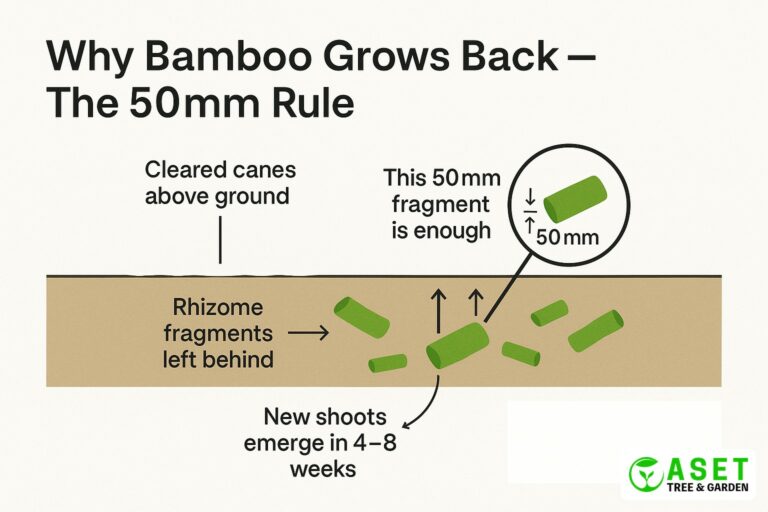
This is also why DIY removal of running bamboo almost always fails. You can cut back the visible plant in an afternoon, but the rhizome network is intact and it has years of stored energy. New shoots emerge from the same rhizomes within weeks, often in places where there was no visible bamboo before. The customer who told us “it just keeps coming back” wasn’t exaggerating — the rhizome is winning.
One of our customers in Pendle Hill described exactly this pattern when we got her call:
“I needed a yucca tree removed at my property in Pendle Hill and I am so glad I called ASET Tree Removal. From the very start, the experience was seamless. I was dealing with Amy and her team, who were incredibly professional, polite, and easy to communicate with.”
What identification means for the removal plan
Sydney bamboo by the numbers
95%
Of Sydney removals
are running varieties
5-10m
Running rhizome
horizontal spread
600mm
Clumping max
root ball diameter
3-10x
Cost difference
running vs clumping
Common species we see in Sydney
Bambusa multiplex (Hedge Bamboo) — clumping. Common screening plant in coastal suburbs.
Bambusa textilis (Weaver’s Bamboo) — clumping. Often planted along Eastern Suburbs boundaries.
Phyllostachys aurea (Golden Bamboo) — running. Most-removed running variety in Western Sydney.
Phyllostachys nigra (Black Bamboo) — running. Decorative but spreads aggressively.
Once you know which type of bamboo you have, the removal approach becomes obvious.
Clumping bamboo removal is usually a contained, achievable job. The clump can often be dug out in a single session with hand tools, the rhizomes are short and stay close to the parent, and as long as you take out the visible mass and a clear margin around it, regrowth is rare. Some homeowners even manage clumping bamboo as a deliberate screening plant — installing a root barrier at planting and keeping the clump tidy with annual trimming.
Running bamboo removal is a programme, not a job. The rhizome network has to be killed before the plant can be permanently removed. That’s what the ASET 3-step Bamboo Eradication Programme is built for: kill the rhizomes first with concentrated herbicide injection, dig out the weakened root ball, then maintain treatment over 2–3 growing seasons to catch any rhizome fragment that still has enough energy to send up a shoot. You can read the full programme structure on our ASET Bamboo Eradication Programme page.
If you’ve identified clumping bamboo and you’re happy to have it stay, you may not need professional help at all. If you’ve identified running bamboo and it’s causing you problems — spreading where you don’t want it, cracking paving, coming through from the neighbour — that’s the call we get most days of the week.
Common Sydney bamboo species, in detail
In our experience across Sydney and Western Sydney, the bamboo species we encounter most often are:
Golden Bamboo (Phyllostachys aurea) — Running. Easily the most common bamboo problem in Sydney suburban gardens. Beautiful yellow-tinged canes when mature, sold widely in nurseries 20+ years ago, often planted as a screening hedge before its invasive habit was widely understood. If your bamboo was planted by a previous owner before about 2010, there’s a good chance this is what you have.
Black Bamboo (Phyllostachys nigra) — Running. Striking dark canes, sold as an ornamental, spreads aggressively. We’ve seen it cross three-metre garden beds in two seasons.
Moso Bamboo (Phyllostachys edulis) — Running. The tallest and fastest-growing of the Phyllostachys species. Less common in Sydney suburban gardens but occasionally planted on larger blocks. Removal is a substantial undertaking.
Slender Weaver (Bambusa textilis ‘Gracilis’) — Clumping. Popular as a privacy screen, well-behaved, doesn’t run. Our default recommendation when a customer asks us “what bamboo should I plant for a hedge?” — though we still suggest installing a root barrier at planting as cheap insurance.
Buddha Belly (Bambusa ventricosa) — Clumping. Distinctive swollen-internode cane, ornamental, very slow spread.
The list isn’t exhaustive — bamboo nurseries sometimes mislabel species, and hybrid varieties can behave differently from either parent — so even if you can identify your bamboo by name, the visual tests in the section above are more reliable than the species ID.
What Our Sydney Customers Say
A huge thank you to the ASET Team for looking after at every stage of taking care of my property. Very professional, punctual and honest. We look forward to using ASET in future and recommend their services to everyone looking for great work in bringing their property back to life! Thank you again.
read moreread less
Hussain Patel
11/01/2025
×
Hussain Patel
11/01/2025
A huge thank you to the ASET Team for looking after at every stage of taking care of my property. Very professional, punctual and honest. We look forward to using ASET in future and recommend their services to everyone looking for great work in bringing their property back to life! Thank you again.
Amy and the team have been very helpful, they have removed a bougainville tree, orange, mulberry and olive tree that have failed to provide fruit for a number of years. I highly recommend ASET Tree Removal. Thank you.
read moreread less
anton barhy
5/10/2026
×
anton barhy
5/10/2026
Amy and the team have been very helpful, they have removed a bougainville tree, orange, mulberry and olive tree that have failed to provide fruit for a number of years. I highly recommend ASET Tree Removal. Thank you.
The team were responsive and professional. Their quality of work was exceptional, thorough and suggestions were made while the original scope was being carried out that was extremely helpful. A detailed quote and scope of work was provided prior to commencement of the job.
read moreread less
Christina
12/23/2024
×
Christina
12/23/2024
The team were responsive and professional. Their quality of work was exceptional, thorough and suggestions were made while the original scope was being carried out that was extremely helpful. A detailed quote and scope of work was provided prior to commencement of the job.
Amy and Ahmed worked in our garden for the first time today. They listened well to what we wanted, were great with communication and left the garden tidy and clean. We look forward to working with them again next month.
read moreread less
Elizabeth Spencer
8/07/2024
×
Elizabeth Spencer
8/07/2024
Amy and Ahmed worked in our garden for the first time today. They listened well to what we wanted, were great with communication and left the garden tidy and clean. We look forward to working with them again next month.
Very happy with the work done by Amy, Ahmads and their crew. They did a very thorough and clean, neat job on my garden as it required lots of manual weeding, spraying, whipper snipping etc due to having lots of pebbles, pavers, rocks etc. Very reasonably priced based on the long hours they put in and I would definitely call them back again for my next garden maintenance job.
read moreread less
veronica loh
10/07/2025
×
veronica loh
10/07/2025
Very happy with the work done by Amy, Ahmads and their crew. They did a very thorough and clean, neat job on my garden as it required lots of manual weeding, spraying, whipper snipping etc due to having lots of pebbles, pavers, rocks etc. Very reasonably priced based on the long hours they put in and I would definitely call them back again for my next garden maintenance job.
The team at ASET were great. Job was to remove 5 very large hedges. Very helpful while organising the quote and explained everything, very accommodating in scheduling, and were able to fit me in earlier than initially expected. Great communication throughout the whole process. The guys did a great job, very quick and efficient, and cleaned up after the job. Would definitely recommend or hire them again.
read moreread less
Courtnee Barnes
4/21/2024
×
Courtnee Barnes
4/21/2024
The team at ASET were great. Job was to remove 5 very large hedges. Very helpful while organising the quote and explained everything, very accommodating in scheduling, and were able to fit me in earlier than initially expected. Great communication throughout the whole process. The guys did a great job, very quick and efficient, and cleaned up after the job. Would definitely recommend or hire them again.
From start to finish Ahmed And his team were extremely professional and extremely knowledgeable. We had some hedges trimmed down as they were too big to manage and my wife and I were very impressed with the work. Highly recommend to use ASET
read moreread less
Matthew Dawson
10/07/2025
×
Matthew Dawson
10/07/2025
From start to finish Ahmed And his team were extremely professional and extremely knowledgeable. We had some hedges trimmed down as they were too big to manage and my wife and I were very impressed with the work. Highly recommend to use ASET
ASET Tree Removal & Garden Rejuvenation did an amazing job of our whole complex’s multiple gardens. The whole team were friendly and professional, and Amy and Ahmed could not have been more accommodating. They communicated every step of the process and were happy to work with us to achieve a fantastic result that has lasted for months based on their recommendations. From quote to job completion, they were fantastic.
read moreread less
Lisa Santos
11/01/2024
×
Lisa Santos
11/01/2024
ASET Tree Removal & Garden Rejuvenation did an amazing job of our whole complex’s multiple gardens. The whole team were friendly and professional, and Amy and Ahmed could not have been more accommodating. They communicated every step of the process and were happy to work with us to achieve a fantastic result that has lasted for months based on their recommendations. From quote to job completion, they were fantastic.
Excellent service. Amy and the team were wonderful to deal with right from the first call. The team provided us with a range of potential solutions based on our situation and ended up recommending us one which was the least costly. Along the way the communication from Amy was always clear. She always made time for us and answered any questions we had before we made any decisions. Highly recommend and would be happy to utilise them again for any future needs.
read moreread less
K L
12/23/2025
×
K L
12/23/2025
Excellent service. Amy and the team were wonderful to deal with right from the first call. The team provided us with a range of potential solutions based on our situation and ended up recommending us one which was the least costly. Along the way the communication from Amy was always clear. She always made time for us and answered any questions we had before we made any decisions. Highly recommend and would be happy to utilise them again for any future needs.
Great team who does fantastic work. Came out to inspect, talked me through the work, kept me well informed during booking, before arriving and on the job. Very knowledgeable and professional. Job well done and easy recommendation. Will be retaining their services for ongoing work.
read moreread less
Kevin Tam
10/30/2025
×
Kevin Tam
10/30/2025
Great team who does fantastic work. Came out to inspect, talked me through the work, kept me well informed during booking, before arriving and on the job. Very knowledgeable and professional. Job well done and easy recommendation. Will be retaining their services for ongoing work.
I needed a yucca tree removed at my property in Pendle Hill and I am so glad I called ASET Tree Removal. From the very start, the experience was seamless. I was dealing with Amy and her team, who were incredibly professional, polite, and easy to communicate with. They made the entire process stress-free and provided a fair quote. The team did a fantastic job with the yucca removal including cleaning up perfectly. If you are looking for a reliable, hardworking, and friendly team for tree services, I cannot recommend ASET Tree Removal enough.
read moreread less
Joanne
12/18/2025
×
Joanne
12/18/2025
I needed a yucca tree removed at my property in Pendle Hill and I am so glad I called ASET Tree Removal. From the very start, the experience was seamless. I was dealing with Amy and her team, who were incredibly professional, polite, and easy to communicate with. They made the entire process stress-free and provided a fair quote. The team did a fantastic job with the yucca removal including cleaning up perfectly. If you are looking for a reliable, hardworking, and friendly team for tree services, I cannot recommend ASET Tree Removal enough.
Quoted for 100 metre's of hedging and removal of vegetation that had over grown onto a busy pedestrian footpath. The team at ASET were great, very professional, accommodating and friendly. Cleaned the site to perfection, did more then i expected, which was pleasant to see. Would highly recommend the ASET team and will definitely hire again for the next project.
read moreread less
Jake Trivor
8/05/2024
×
Jake Trivor
8/05/2024
Quoted for 100 metre's of hedging and removal of vegetation that had over grown onto a busy pedestrian footpath. The team at ASET were great, very professional, accommodating and friendly. Cleaned the site to perfection, did more then i expected, which was pleasant to see. Would highly recommend the ASET team and will definitely hire again for the next project.
Free on-site bamboo identification + quote
We’ve worked with every common Sydney bamboo species. Site visit takes 20 minutes and you get a written quote within 48 hours.
Clumping bamboo — single half-day dig, no follow-up needed in most cases.
Running bamboo — 1-5 day excavation with mandatory 6-week follow-up.
Misidentifying a running bamboo as clumping = removal attempt that fails and costs 2-3x more on the second go.
If you’ve identified clumping bamboo and want to keep it: no action needed beyond annual trimming.
If you’ve identified clumping bamboo and want to remove it: a single weekend of digging usually does it, though we’re happy to quote if the clump is large or in an awkward spot.
If you’ve identified running bamboo and want to remove it: this is where the call to a specialist matters. Cutting it back without treating the rhizomes will give you the appearance of removal for a few weeks before the new shoots emerge. The honest path is a multi-month treatment programme. The dishonest path is the cheap operator who’ll happily cut the visible plant and leave town before the rhizome retaliates.
If your bamboo is coming from the neighbour’s side: read what to do when your neighbour’s bamboo is invading your property before you do anything else. The treatment plan depends on whether you can do joint treatment with the neighbour or whether a root barrier is the right alternative.
A customer in Narellan Vale gave us a five-star review last month and her opening line is the kind of feedback we hear often when we get the species identification right at the quote stage:
“Their service was fantastic from the first call to finishing the job. I needed 3 palm trees removed from my yard in Narellan Vale. I called and the customer service was very quick, polite, professional and helpful. I got the quote which was much cheaper than quoted elsewhere.”
Specialist bamboo removal across Sydney and Western Sydney. Running bamboo, clumping bamboo, joint-property treatments, root barriers — done properly so it doesn’t come back.
“The team were responsive and professional. Their quality of work was exceptional, thorough and suggestions were made while the original scope was being carried out that was extremely helpful. A detailed quote and scope of work was provided prior to commencement of the job.”
— Christina, Oyster Bay · ★★★★★
Bamboo removal doesn’t have to be complicated. At ASET Tree Removal, we help you understand exactly what species you’ve got and what realistic removal looks like for your property, so you can make a decision you’ll be comfortable with for the long term.
No pushy sales tactics. We have a friendly conversation, show you the lay of the land, and explain the different options available. You move forward at your own pace. People choose to work with us because we educate them on their options and help them feel confident about what will work best for them.
We’ll walk you through the rhizome biology so you’re not caught off guard. We’ll explain the realistic timeline so you know what you’ll commit to for different scenarios. And we’ll help you navigate the practical decisions — whether to push for a full eradication programme, install a root barrier, or treat the clumping bamboo you’ve got as a feature rather than a problem.
Our goal is straightforward. We want you to have a bamboo solution that works when you need it, not a quick fix that comes back next year.
Get in touch with us today. We’ll review your situation, answer your questions, and help you find the right approach at a price that makes sense.
How We Work With You
Our process is straightforward and designed around your needs.
Step 1: We Talk and Answer Your Questions
When you get in touch, we’ll call you up for a friendly conversation. We’ll explain who we are, what we do, and most importantly, what we’re going to do for you specifically. We’ll answer any questions you have about bamboo, the removal process, or anything else that’s on your mind.
Step 2: We Inspect and Educate You on Your Options
We’ll visit your property and identify the bamboo species, map the rhizome direction, and check whether neighbouring properties are involved. We’ll come back to you with the realistic options for your situation and explain what each one means in terms of cost and timeline.
Step 3: You Decide What Works Best
We’ll talk through the options with you in person or on the phone. We’ll explain the differences between a full eradication programme, a root barrier install, or a single-clump removal, and make sure you’re comfortable with everything. The choice is yours. We’re here to help you make an informed decision.
Step 4: We Stay With You Through the Programme
Once your bamboo treatment starts, we’re here for the full duration. For running bamboo that’s a 6-month to 2.5-year programme — we’ll visit at the scheduled intervals, treat any new shoots that emerge, and confirm the eradication is permanent before we close the file.
Get in Touch With Us Today
If you’re not sure whether your bamboo is running or clumping, or you’ve already identified it as running bamboo and you want a quote on permanent removal, we’re a phone call away.
ASET Tree Removal is a family-operated specialist vegetation business serving Sydney and Western Sydney. Ahmed is the head arborist — Cert3-qualified with 8+ years of field experience, leading every job on site. Amy handles client communication, quoting, and scheduling, making sure every property is handed back tidier than we found it. Together they run a business where one phone call gets you straight to the people doing the work.
Excellent service. Amy and the team were wonderful to deal with right from the first call. The team provided us with a range of potential solutions based on our situation and ended up recommending us one which was the least costly. Along the way the communication from Amy was always clear. She always made time for us and answered any questions we had before we made any decisions. Highly recommend and would be happy to utilise them again for any future needs.
read moreread less
K L
12/23/2025
×
K L
12/23/2025
Excellent service. Amy and the team were wonderful to deal with right from the first call. The team provided us with a range of potential solutions based on our situation and ended up recommending us one which was the least costly. Along the way the communication from Amy was always clear. She always made time for us and answered any questions we had before we made any decisions. Highly recommend and would be happy to utilise them again for any future needs.
I highly recommend ASET they gave our gardens the biggest face lift very happy with the job. I was completely impressed with their professionalism and customer service from start to finish. 10 Star
read moreread less
Yeet Pro
11/11/2024
×
Yeet Pro
11/11/2024
I highly recommend ASET they gave our gardens the biggest face lift very happy with the job. I was completely impressed with their professionalism and customer service from start to finish. 10 Star
They did a great job taking a stump off my garden. Communication was perfect, they went above and beyond to make sure everything was good. I will definitely get them and trust them to do my next jobs.
read moreread less
Pierro Saba
9/07/2024
×
Pierro Saba
9/07/2024
They did a great job taking a stump off my garden. Communication was perfect, they went above and beyond to make sure everything was good. I will definitely get them and trust them to do my next jobs.
The team at ASET were great. Job was to remove 5 very large hedges. Very helpful while organising the quote and explained everything, very accommodating in scheduling, and were able to fit me in earlier than initially expected. Great communication throughout the whole process. The guys did a great job, very quick and efficient, and cleaned up after the job. Would definitely recommend or hire them again.
read moreread less
Courtnee Barnes
4/21/2024
×
Courtnee Barnes
4/21/2024
The team at ASET were great. Job was to remove 5 very large hedges. Very helpful while organising the quote and explained everything, very accommodating in scheduling, and were able to fit me in earlier than initially expected. Great communication throughout the whole process. The guys did a great job, very quick and efficient, and cleaned up after the job. Would definitely recommend or hire them again.
ASET tree Removal’s work was fantastic!! From the initial enquiry to cut our tall hedge to the final product was second to none. Their attention to detail and good quality work was very appreciated. Will definitely use them again!!
read moreread less
K Dro
8/24/2024
×
K Dro
8/24/2024
ASET tree Removal’s work was fantastic!! From the initial enquiry to cut our tall hedge to the final product was second to none. Their attention to detail and good quality work was very appreciated. Will definitely use them again!!
Amy and the team have been very helpful, they have removed a bougainville tree, orange, mulberry and olive tree that have failed to provide fruit for a number of years. I highly recommend ASET Tree Removal. Thank you.
read moreread less
anton barhy
5/10/2026
×
anton barhy
5/10/2026
Amy and the team have been very helpful, they have removed a bougainville tree, orange, mulberry and olive tree that have failed to provide fruit for a number of years. I highly recommend ASET Tree Removal. Thank you.
The guys came out and trimmed a large hedge that I have. It’s roughly 20m long and 2.5m high and roughly 1.5m wide. The job they did was terrific. Not only trimming it, but leveling it out. I will definitely use their services again. Fantastic job. Thanks.
read moreread less
Paul N
12/04/2024
×
Paul N
12/04/2024
The guys came out and trimmed a large hedge that I have. It’s roughly 20m long and 2.5m high and roughly 1.5m wide. The job they did was terrific. Not only trimming it, but leveling it out. I will definitely use their services again. Fantastic job. Thanks.
Quick response with a quote.. Very friendly and Great work ethic and reasonable pricing. Highly recommend… Appreciate your help cleaning up our Backyard Garden and taking it away for us as well. Regards George
read moreread less
George Apostal
4/03/2024
×
George Apostal
4/03/2024
Quick response with a quote.. Very friendly and Great work ethic and reasonable pricing. Highly recommend… Appreciate your help cleaning up our Backyard Garden and taking it away for us as well. Regards George
I highly recommend ASET Tree Removal for all your garden needs, they are prompt, highly skilled and a pleasure to work with, thank you so much for your hard work
read moreread less
Violet Laubhan
9/05/2024
×
Violet Laubhan
9/05/2024
I highly recommend ASET Tree Removal for all your garden needs, they are prompt, highly skilled and a pleasure to work with, thank you so much for your hard work
Great team who does fantastic work. Came out to inspect, talked me through the work, kept me well informed during booking, before arriving and on the job. Very knowledgeable and professional. Job well done and easy recommendation. Will be retaining their services for ongoing work.
read moreread less
Kevin Tam
10/30/2025
×
Kevin Tam
10/30/2025
Great team who does fantastic work. Came out to inspect, talked me through the work, kept me well informed during booking, before arriving and on the job. Very knowledgeable and professional. Job well done and easy recommendation. Will be retaining their services for ongoing work.
Their service was fantastic from the first call to finishing the job. I needed 3 palm trees removed from my yard in Narellan Vale. I called and the customer service was very quick, polite, professional and helpful. I got the quote which was much cheaper than quoted elsewhere. They were able to come the next morning and did a great job removing the rubbish and tidying up. Highly recommend!
read moreread less
naomi gauld
1/23/2026
×
naomi gauld
1/23/2026
Their service was fantastic from the first call to finishing the job. I needed 3 palm trees removed from my yard in Narellan Vale. I called and the customer service was very quick, polite, professional and helpful. I got the quote which was much cheaper than quoted elsewhere. They were able to come the next morning and did a great job removing the rubbish and tidying up. Highly recommend!
ASET Tree Removal & Garden Rejuvenation did an amazing job of our whole complex’s multiple gardens. The whole team were friendly and professional, and Amy and Ahmed could not have been more accommodating. They communicated every step of the process and were happy to work with us to achieve a fantastic result that has lasted for months based on their recommendations. From quote to job completion, they were fantastic.
read moreread less
Lisa Santos
11/01/2024
×
Lisa Santos
11/01/2024
ASET Tree Removal & Garden Rejuvenation did an amazing job of our whole complex’s multiple gardens. The whole team were friendly and professional, and Amy and Ahmed could not have been more accommodating. They communicated every step of the process and were happy to work with us to achieve a fantastic result that has lasted for months based on their recommendations. From quote to job completion, they were fantastic.
From start to finish Ahmed And his team were extremely professional and extremely knowledgeable. We had some hedges trimmed down as they were too big to manage and my wife and I were very impressed with the work. Highly recommend to use ASET
read moreread less
Matthew Dawson
10/07/2025
×
Matthew Dawson
10/07/2025
From start to finish Ahmed And his team were extremely professional and extremely knowledgeable. We had some hedges trimmed down as they were too big to manage and my wife and I were very impressed with the work. Highly recommend to use ASET
Amy and Ahmed worked in our garden for the first time today. They listened well to what we wanted, were great with communication and left the garden tidy and clean. We look forward to working with them again next month.
read moreread less
Elizabeth Spencer
8/07/2024
×
Elizabeth Spencer
8/07/2024
Amy and Ahmed worked in our garden for the first time today. They listened well to what we wanted, were great with communication and left the garden tidy and clean. We look forward to working with them again next month.
A huge thank you to the ASET Team for looking after at every stage of taking care of my property. Very professional, punctual and honest. We look forward to using ASET in future and recommend their services to everyone looking for great work in bringing their property back to life! Thank you again.
read moreread less
Hussain Patel
11/01/2025
×
Hussain Patel
11/01/2025
A huge thank you to the ASET Team for looking after at every stage of taking care of my property. Very professional, punctual and honest. We look forward to using ASET in future and recommend their services to everyone looking for great work in bringing their property back to life! Thank you again.
Very happy with the work done by Amy, Ahmads and their crew. They did a very thorough and clean, neat job on my garden as it required lots of manual weeding, spraying, whipper snipping etc due to having lots of pebbles, pavers, rocks etc. Very reasonably priced based on the long hours they put in and I would definitely call them back again for my next garden maintenance job.
read moreread less
veronica loh
10/07/2025
×
veronica loh
10/07/2025
Very happy with the work done by Amy, Ahmads and their crew. They did a very thorough and clean, neat job on my garden as it required lots of manual weeding, spraying, whipper snipping etc due to having lots of pebbles, pavers, rocks etc. Very reasonably priced based on the long hours they put in and I would definitely call them back again for my next garden maintenance job.
Ahmad was very professional during quote and conduct of the job. He engaged with me at all stages to ensure the work was carried to out my requirements. Highly recommended.
read moreread less
Simon Harris
10/07/2025
×
Simon Harris
10/07/2025
Ahmad was very professional during quote and conduct of the job. He engaged with me at all stages to ensure the work was carried to out my requirements. Highly recommended.
I needed a yucca tree removed at my property in Pendle Hill and I am so glad I called ASET Tree Removal. From the very start, the experience was seamless. I was dealing with Amy and her team, who were incredibly professional, polite, and easy to communicate with. They made the entire process stress-free and provided a fair quote. The team did a fantastic job with the yucca removal including cleaning up perfectly. If you are looking for a reliable, hardworking, and friendly team for tree services, I cannot recommend ASET Tree Removal enough.
read moreread less
Joanne
12/18/2025
×
Joanne
12/18/2025
I needed a yucca tree removed at my property in Pendle Hill and I am so glad I called ASET Tree Removal. From the very start, the experience was seamless. I was dealing with Amy and her team, who were incredibly professional, polite, and easy to communicate with. They made the entire process stress-free and provided a fair quote. The team did a fantastic job with the yucca removal including cleaning up perfectly. If you are looking for a reliable, hardworking, and friendly team for tree services, I cannot recommend ASET Tree Removal enough.
They did an amazing job cleaning and organising my yard. They were really friendly, gave great advice and were fair priced. Thanks dor and awesome job. Highly recommend ASET Tree Removal.
read moreread less
Angelo Iannarilli
10/12/2024
×
Angelo Iannarilli
10/12/2024
They did an amazing job cleaning and organising my yard. They were really friendly, gave great advice and were fair priced. Thanks dor and awesome job. Highly recommend ASET Tree Removal.
Quoted for 100 metre's of hedging and removal of vegetation that had over grown onto a busy pedestrian footpath. The team at ASET were great, very professional, accommodating and friendly. Cleaned the site to perfection, did more then i expected, which was pleasant to see. Would highly recommend the ASET team and will definitely hire again for the next project.
read moreread less
Jake Trivor
8/05/2024
×
Jake Trivor
8/05/2024
Quoted for 100 metre's of hedging and removal of vegetation that had over grown onto a busy pedestrian footpath. The team at ASET were great, very professional, accommodating and friendly. Cleaned the site to perfection, did more then i expected, which was pleasant to see. Would highly recommend the ASET team and will definitely hire again for the next project.
The right method for YOUR bamboo type
Different species need different methods. We adapt the equipment, the timeline, and the price to what you actually have — not a generic quote.
Information in the arboriculture industry changes frequently. Linked content may change or become outdated. Please always contact us for help with your important property decisions.
Look at the new shoots. Clumping bamboo throws new canes within 50-200mm of existing canes. Running bamboo throws new canes 1-3 metres or more from any existing cane — often through paving or in the middle of a lawn.
Running bamboo rhizome networks spread 5-10 metres laterally. Clumping bamboo rhizomes stay in a 150-600mm root ball. The dig for running bamboo can be 4-8 times the work of the same-size clumping job.
Clumping species stay clumping — that’s a genetic trait. What can happen is the parent clump grows year-on-year and the visible spread looks larger, but the rhizome itself doesn’t run.
Want a Sydney bamboo specialist to look at your stand? Free on-site visit, written quote within 48 hours.
Phyllostachys aurea (Golden Bamboo) is by far the most common, planted as a privacy screen in the 1990s and 2000s. Phyllostachys nigra (Black Bamboo) is the second most common — same removal difficulty.
No. Clumping bamboo gets a single dig-out around the root ball. Running bamboo gets a full rhizome network excavation with a 6-week follow-up. The 3-step process is the same; the scale of stage 2 changes dramatically.
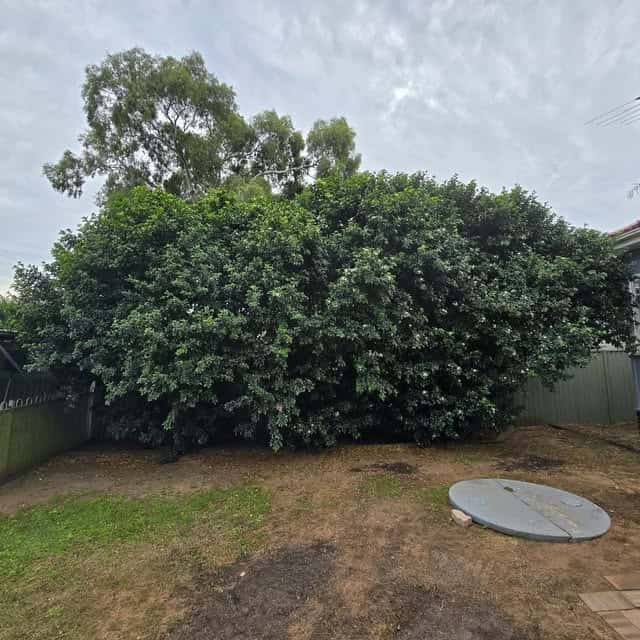
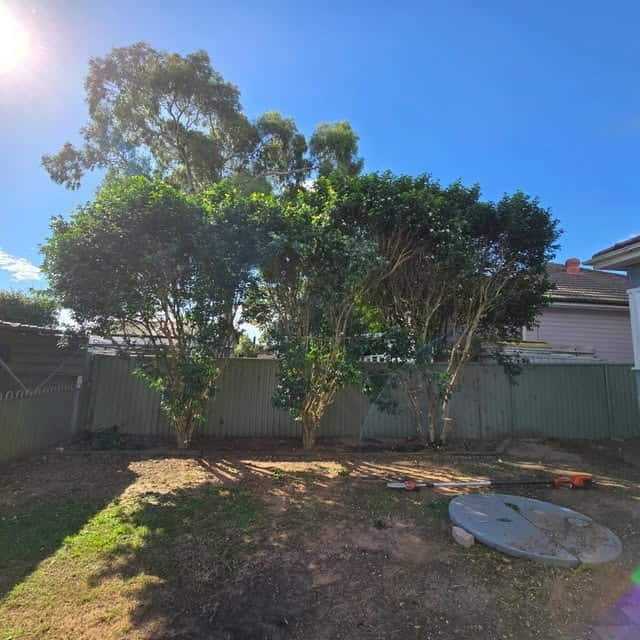
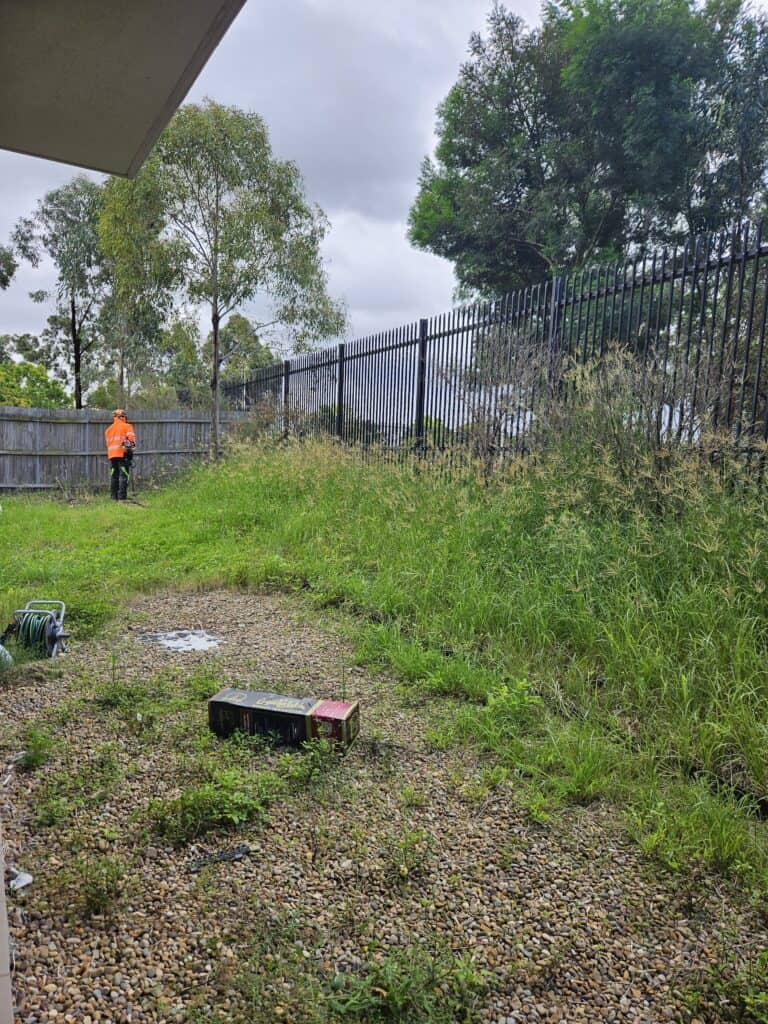
A real ASET bamboo eradication programme on a Western Sydney property u2014 running bamboo, neighbour boundary, 18-month timeline. What it took to fully remove.