A bamboo root barrier is a physical wall installed vertically in the soil to stop bamboo rhizomes travelling through. They’re the practical answer for two situations: containing a bamboo planting you want to keep, and stopping a neighbour’s bamboo from invading your property when full eradication isn’t possible. Properly installed, a quality HDPE barrier is about 80% effective at blocking rhizome travel and lasts 50+ years. Badly installed, it’s worse than no barrier — it gives false confidence while the bamboo finds its way around. The difference is almost entirely in the depth, the material, and the seam sealing.
What a barrier actually does
HDPE vs concrete root barrier
HDPE: Flexible, 25-30 year lifespan, $100-180/m installed. Doesn’t crack with soil movement.
Concrete: Rigid, 30-50 year lifespan, $300-450/m installed. Cracks under root pressure or soil shift.
Standard recommendation: HDPE for residential. Concrete only for commercial or specific structural reasons.
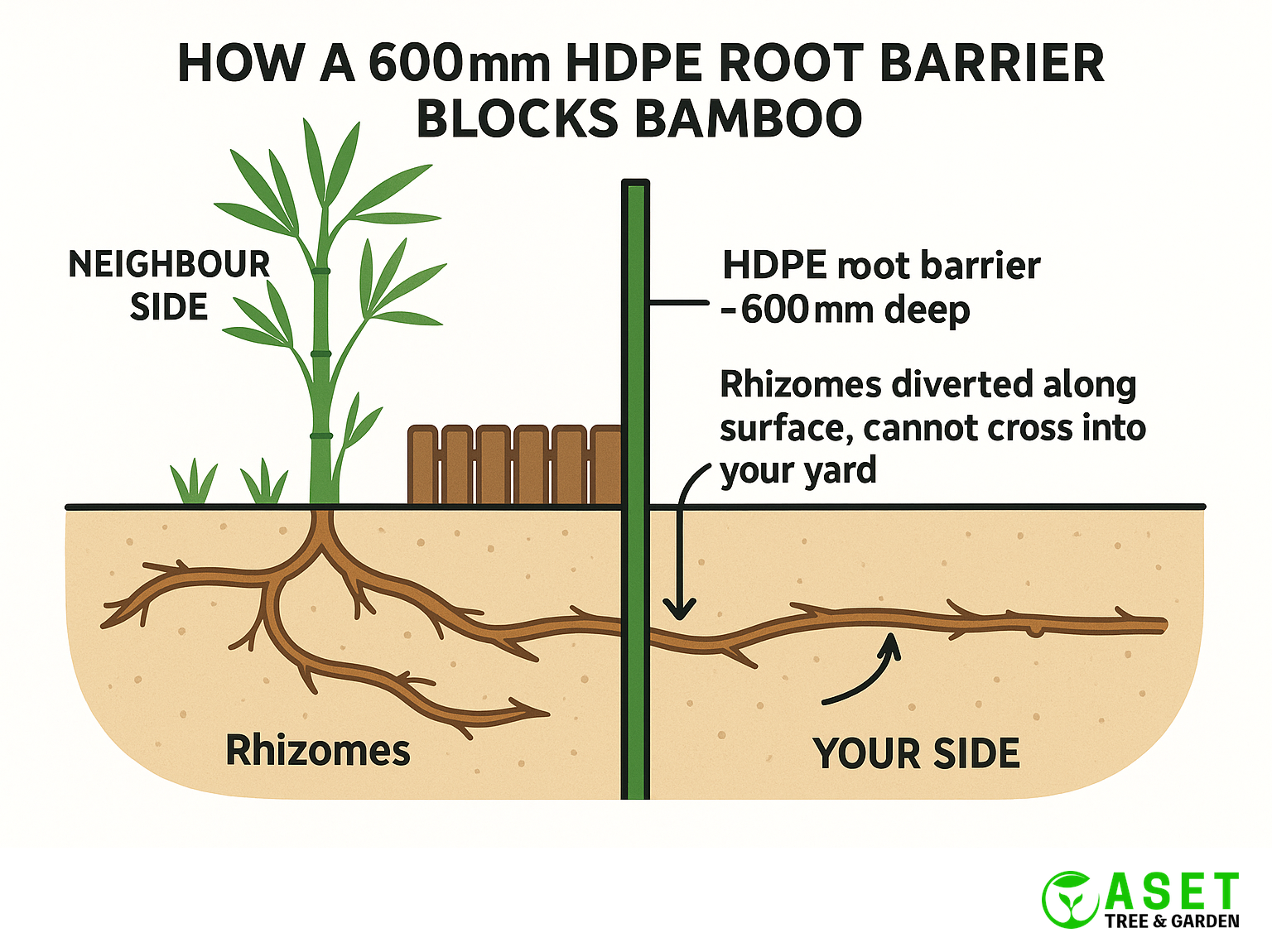
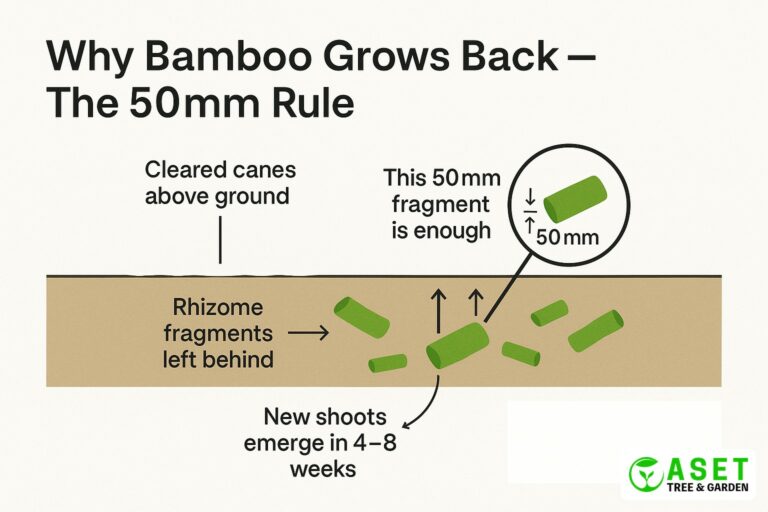
Bamboo rhizomes are shallow travellers — they sit in the top 30-40cm of soil and run horizontally. A barrier sunk 60-90cm deep intercepts the rhizome as it tries to push through. When the rhizome hits the barrier it follows the path of least resistance: upward, along the barrier’s vertical face, eventually emerging at the surface.
That last part is the operational trick: a barrier doesn’t kill the rhizome, it redirects it to the surface where it can be spotted and cut. Barriers work best when paired with regular inspection — quarterly walks along the barrier line, cutting any shoots that have emerged at the top edge.
The 80% effectiveness number reflects this. With a properly installed barrier AND quarterly inspection, about 80% of rhizome incursions are stopped or caught. The other 20% find a way through — usually at seam joins that were sealed imperfectly, under shallow sections, or over the top edge if the barrier wasn’t raised above ground level.
What Our Sydney Customers Say
Great team who does fantastic work. Came out to inspect, talked me through the work, kept me well informed during booking, before arriving and on the job. Very knowledgeable and professional. Job well done and easy recommendation. Will be retaining their services for ongoing work.
read moreread less
Kevin Tam
10/30/2025
×
Kevin Tam
10/30/2025
Great team who does fantastic work. Came out to inspect, talked me through the work, kept me well informed during booking, before arriving and on the job. Very knowledgeable and professional. Job well done and easy recommendation. Will be retaining their services for ongoing work.
ASET Tree Removal & Garden Rejuvenation did an amazing job of our whole complex’s multiple gardens. The whole team were friendly and professional, and Amy and Ahmed could not have been more accommodating. They communicated every step of the process and were happy to work with us to achieve a fantastic result that has lasted for months based on their recommendations. From quote to job completion, they were fantastic.
read moreread less
Lisa Santos
11/01/2024
×
Lisa Santos
11/01/2024
ASET Tree Removal & Garden Rejuvenation did an amazing job of our whole complex’s multiple gardens. The whole team were friendly and professional, and Amy and Ahmed could not have been more accommodating. They communicated every step of the process and were happy to work with us to achieve a fantastic result that has lasted for months based on their recommendations. From quote to job completion, they were fantastic.
Quoted for 100 metre's of hedging and removal of vegetation that had over grown onto a busy pedestrian footpath. The team at ASET were great, very professional, accommodating and friendly. Cleaned the site to perfection, did more then i expected, which was pleasant to see. Would highly recommend the ASET team and will definitely hire again for the next project.
read moreread less
Jake Trivor
8/05/2024
×
Jake Trivor
8/05/2024
Quoted for 100 metre's of hedging and removal of vegetation that had over grown onto a busy pedestrian footpath. The team at ASET were great, very professional, accommodating and friendly. Cleaned the site to perfection, did more then i expected, which was pleasant to see. Would highly recommend the ASET team and will definitely hire again for the next project.
Their service was fantastic from the first call to finishing the job. I needed 3 palm trees removed from my yard in Narellan Vale. I called and the customer service was very quick, polite, professional and helpful. I got the quote which was much cheaper than quoted elsewhere. They were able to come the next morning and did a great job removing the rubbish and tidying up. Highly recommend!
read moreread less
naomi gauld
1/23/2026
×
naomi gauld
1/23/2026
Their service was fantastic from the first call to finishing the job. I needed 3 palm trees removed from my yard in Narellan Vale. I called and the customer service was very quick, polite, professional and helpful. I got the quote which was much cheaper than quoted elsewhere. They were able to come the next morning and did a great job removing the rubbish and tidying up. Highly recommend!
I highly recommend ASET they gave our gardens the biggest face lift very happy with the job. I was completely impressed with their professionalism and customer service from start to finish. 10 Star
read moreread less
Yeet Pro
11/11/2024
×
Yeet Pro
11/11/2024
I highly recommend ASET they gave our gardens the biggest face lift very happy with the job. I was completely impressed with their professionalism and customer service from start to finish. 10 Star
From start to finish Ahmed And his team were extremely professional and extremely knowledgeable. We had some hedges trimmed down as they were too big to manage and my wife and I were very impressed with the work. Highly recommend to use ASET
read moreread less
Matthew Dawson
10/07/2025
×
Matthew Dawson
10/07/2025
From start to finish Ahmed And his team were extremely professional and extremely knowledgeable. We had some hedges trimmed down as they were too big to manage and my wife and I were very impressed with the work. Highly recommend to use ASET
The team were responsive and professional. Their quality of work was exceptional, thorough and suggestions were made while the original scope was being carried out that was extremely helpful. A detailed quote and scope of work was provided prior to commencement of the job.
read moreread less
Christina
12/23/2024
×
Christina
12/23/2024
The team were responsive and professional. Their quality of work was exceptional, thorough and suggestions were made while the original scope was being carried out that was extremely helpful. A detailed quote and scope of work was provided prior to commencement of the job.
Ahmad was very professional during quote and conduct of the job. He engaged with me at all stages to ensure the work was carried to out my requirements. Highly recommended.
read moreread less
Simon Harris
10/07/2025
×
Simon Harris
10/07/2025
Ahmad was very professional during quote and conduct of the job. He engaged with me at all stages to ensure the work was carried to out my requirements. Highly recommended.
I needed a yucca tree removed at my property in Pendle Hill and I am so glad I called ASET Tree Removal. From the very start, the experience was seamless. I was dealing with Amy and her team, who were incredibly professional, polite, and easy to communicate with. They made the entire process stress-free and provided a fair quote. The team did a fantastic job with the yucca removal including cleaning up perfectly. If you are looking for a reliable, hardworking, and friendly team for tree services, I cannot recommend ASET Tree Removal enough.
read moreread less
Joanne
12/18/2025
×
Joanne
12/18/2025
I needed a yucca tree removed at my property in Pendle Hill and I am so glad I called ASET Tree Removal. From the very start, the experience was seamless. I was dealing with Amy and her team, who were incredibly professional, polite, and easy to communicate with. They made the entire process stress-free and provided a fair quote. The team did a fantastic job with the yucca removal including cleaning up perfectly. If you are looking for a reliable, hardworking, and friendly team for tree services, I cannot recommend ASET Tree Removal enough.
A huge thank you to the ASET Team for looking after at every stage of taking care of my property. Very professional, punctual and honest. We look forward to using ASET in future and recommend their services to everyone looking for great work in bringing their property back to life! Thank you again.
read moreread less
Hussain Patel
11/01/2025
×
Hussain Patel
11/01/2025
A huge thank you to the ASET Team for looking after at every stage of taking care of my property. Very professional, punctual and honest. We look forward to using ASET in future and recommend their services to everyone looking for great work in bringing their property back to life! Thank you again.
Need an HDPE root barrier installed properly?
We install 600-750mm-deep HDPE barriers with proper seam overlap and heat-welded joints. 25-30 year lifespan. The barrier only works if it’s installed right — that’s what you pay us for.
Three main scenarios make a barrier the right answer rather than full eradication:
1. Neighbour’s bamboo, neighbour won’t cooperate. The bamboo source is on the other side of the fence. You can’t enter their property to treat it. A barrier on your boundary blocks the rhizome from crossing onto your side — not perfect, but it gives about 80% protection against bamboo creeping back.
2. Planting new clumping bamboo deliberately. You want clumping bamboo as a screen or feature, and you want it to stay exactly where you planted it. Installing a barrier at planting prevents any unexpected spread and gives you total predictability.
3. After eradication, to prevent re-invasion. You’ve done the multi-year eradication programme on your side. The neighbour’s bamboo is still there. A root-proof barrier ensures the rhizome can’t re-establish via the neighbour’s network.
When a barrier is NOT the right call
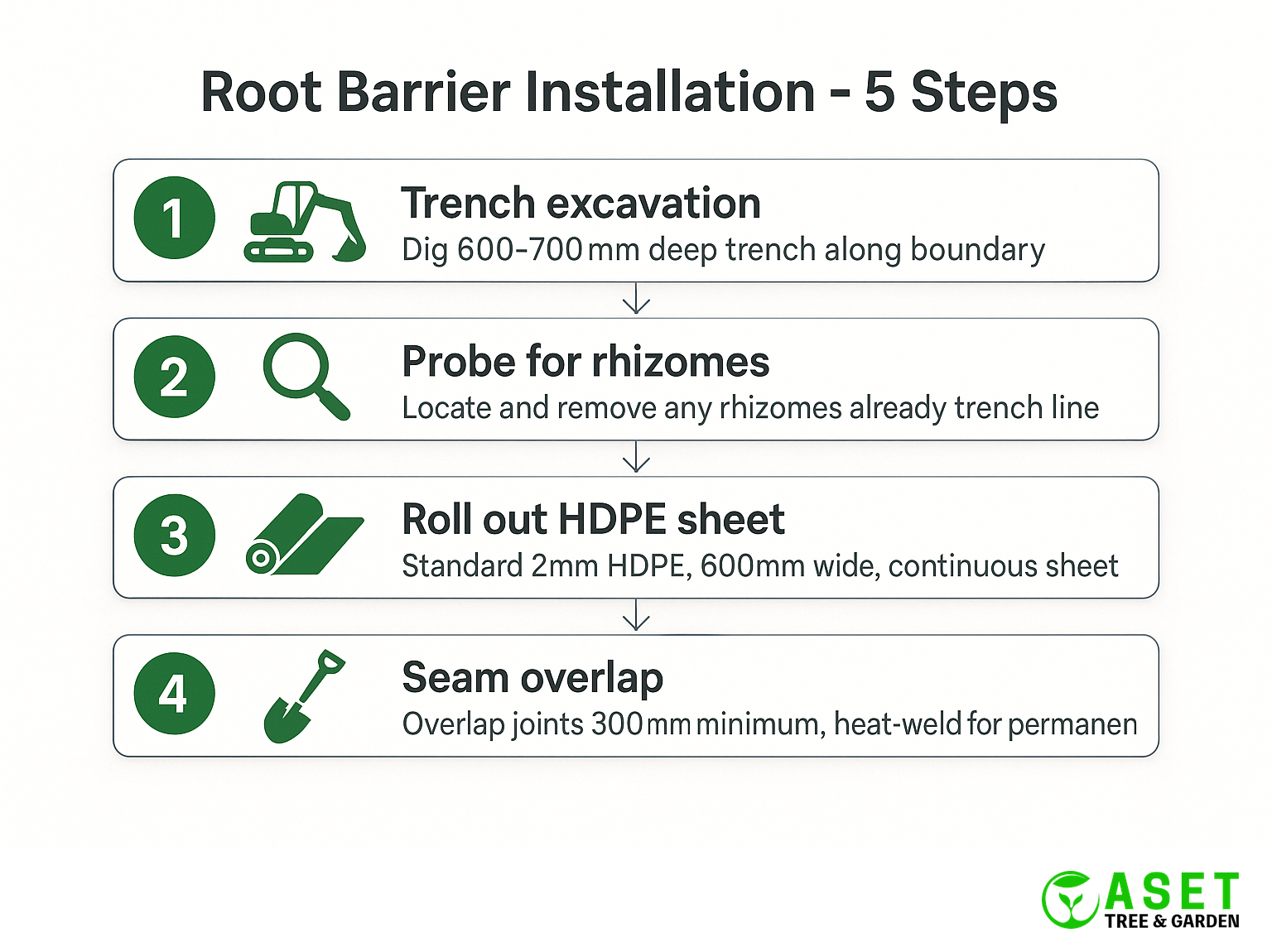
The 5-step installation process.
A barrier is not a substitute for eradicating existing bamboo on a single property. If you’ve got running bamboo on your side and you want it gone, the answer is the ASET 3-Step Bamboo Eradication Programme — not a barrier. Installing a barrier around existing bamboo just contains it within a smaller area; the bamboo continues to live and spread within the barrier.
Barriers also don’t suit:
Poor-quality or rocky soil where the barrier can’t be installed to depth
Trench lines that would cross paving, pool surrounds, foundations, or pipework
Situations where the customer can’t commit to quarterly inspection along the barrier line
Materials — what works, what doesn’t
“The team were responsive and professional. Their quality of work was exceptional, thorough and suggestions were made while the original scope was being carried out that was extremely helpful. A detailed quote and scope of work was provided prior to commencement of the job.”
HDPE with heat-welded seams (premium): Add $20-$40/m
Average residential job: 10-20m of barrier, total $1,200-$3,200
HDPE (high-density polyethylene) sheet, typically 60mil thickness or greater, is the only material we use for permanent barrier installation. Specialised bamboo-barrier HDPE is sold in rolls 60-90cm wide, designed for this exact application. Lasts 50+ years in soil if installed correctly.
What doesn’t work:
Standard polyethylene sheet (the kind sold at hardware stores as “weed barrier”) — bamboo rhizomes punch straight through within a season or two
Geotextile fabric — designed for filtration, not for blocking root growth
Concrete kerbing — looks like it should work, but rhizomes find joints and follow them down
Galvanised steel sheet — corrodes faster in moist soil than HDPE lasts
Timber boards — rot, and bamboo rhizomes can grow through rotted wood
Installation — what’s involved
Root barrier by the numbers
600 mm
Minimum depth
for HDPE 2mm
750 mm
Clay-soil depth
rhizomes go deeper
25-30 yr
HDPE lifespan
with proper install
300 mm
Seam overlap
minimum for continuity
Standard installation steps:
Site survey. We map the proposed barrier line, identify any underground services (sprinklers, conduits) along the route, and confirm soil type at depth. If the soil is too rocky or there are obstacles, we’ll redesign the line before starting.
Trench excavation. 60-90cm deep, 30-40cm wide. Hand-dug in established gardens where access is restricted; mechanical where the access allows and there’s nothing to protect.
Barrier installation. Roll out the HDPE in the trench. Top edge raised 5-10cm above ground level — this is the part DIY barriers always get wrong, and the reason most DIY installs fail. The exposed top edge lets you see any rhizome that’s tried to climb over.
Seam sealing. All seams overlap minimum 30cm and are sealed with appropriate adhesive or mechanical fasteners. The seams are the most common failure points; they get the most attention.
Backfill and compact. Trench refilled with the original soil (or quality fill if the original isn’t suitable), compacted in stages to prevent settling that could expose the barrier top.
Ongoing inspection schedule. We provide a handover document with the recommended inspection cadence — quarterly for year 1, then biannually. Spotting and cutting shoots at the barrier top is what makes the 80% effectiveness real.
Costs
When you need a barrier vs when you don’t
Need one: Active source on neighbour’s side that’s not being removed.
Need one: Sensitive structure within 5m of the existing bamboo (pool, footing, paving).
Don’t need one: All bamboo removed on your property, no neighbour source, no nearby structures at risk.
Don’t need one: Clumping bamboo — the root ball doesn’t spread.
Bamboo barrier installation is priced per linear metre of trench. The main cost factors are:
Linear distance. A 12-metre boundary is dramatically less work than a 30-metre boundary.
Soil type. Sandy or loamy Sydney soil is straightforward to dig; clay or rocky soil takes much longer.
Access. Wheelbarrow access vs vehicle access vs hand-carry across the back garden — all affect the labour.
Existing bamboo. If the bamboo is currently growing along the proposed barrier line, we’ll need to clear the visible plant first before trenching.
Underground services. Diverting around sprinklers, conduits, or root systems of nearby trees adds time.
For most Sydney suburban jobs, barrier installation comes in at a few thousand dollars. We quote per job after a site visit.
Cost vs the alternative
The relevant comparison is: barrier installation cost (one-off) vs ongoing eradication treatment cost (multi-year). For a property where the bamboo source is on the neighbour’s side and you can’t get joint treatment going, the barrier is the cheaper long-term option. It’s a one-off install plus low-effort quarterly inspection, versus an indefinite annual treatment programme on your side that never fully resolves the problem.
For a property where joint treatment IS possible, eradication via the 3-step programme is the right answer — full permanent removal rather than indefinite containment.
What Our Sydney Customers Say
From start to finish Ahmed And his team were extremely professional and extremely knowledgeable. We had some hedges trimmed down as they were too big to manage and my wife and I were very impressed with the work. Highly recommend to use ASET
read moreread less
Matthew Dawson
10/07/2025
×
Matthew Dawson
10/07/2025
From start to finish Ahmed And his team were extremely professional and extremely knowledgeable. We had some hedges trimmed down as they were too big to manage and my wife and I were very impressed with the work. Highly recommend to use ASET
Amy and the team have been very helpful, they have removed a bougainville tree, orange, mulberry and olive tree that have failed to provide fruit for a number of years. I highly recommend ASET Tree Removal. Thank you.
read moreread less
anton barhy
5/10/2026
×
anton barhy
5/10/2026
Amy and the team have been very helpful, they have removed a bougainville tree, orange, mulberry and olive tree that have failed to provide fruit for a number of years. I highly recommend ASET Tree Removal. Thank you.
The team at ASET were great. Job was to remove 5 very large hedges. Very helpful while organising the quote and explained everything, very accommodating in scheduling, and were able to fit me in earlier than initially expected. Great communication throughout the whole process. The guys did a great job, very quick and efficient, and cleaned up after the job. Would definitely recommend or hire them again.
read moreread less
Courtnee Barnes
4/21/2024
×
Courtnee Barnes
4/21/2024
The team at ASET were great. Job was to remove 5 very large hedges. Very helpful while organising the quote and explained everything, very accommodating in scheduling, and were able to fit me in earlier than initially expected. Great communication throughout the whole process. The guys did a great job, very quick and efficient, and cleaned up after the job. Would definitely recommend or hire them again.
Quoted for 100 metre's of hedging and removal of vegetation that had over grown onto a busy pedestrian footpath. The team at ASET were great, very professional, accommodating and friendly. Cleaned the site to perfection, did more then i expected, which was pleasant to see. Would highly recommend the ASET team and will definitely hire again for the next project.
read moreread less
Jake Trivor
8/05/2024
×
Jake Trivor
8/05/2024
Quoted for 100 metre's of hedging and removal of vegetation that had over grown onto a busy pedestrian footpath. The team at ASET were great, very professional, accommodating and friendly. Cleaned the site to perfection, did more then i expected, which was pleasant to see. Would highly recommend the ASET team and will definitely hire again for the next project.
Great team who does fantastic work. Came out to inspect, talked me through the work, kept me well informed during booking, before arriving and on the job. Very knowledgeable and professional. Job well done and easy recommendation. Will be retaining their services for ongoing work.
read moreread less
Kevin Tam
10/30/2025
×
Kevin Tam
10/30/2025
Great team who does fantastic work. Came out to inspect, talked me through the work, kept me well informed during booking, before arriving and on the job. Very knowledgeable and professional. Job well done and easy recommendation. Will be retaining their services for ongoing work.
A huge thank you to the ASET Team for looking after at every stage of taking care of my property. Very professional, punctual and honest. We look forward to using ASET in future and recommend their services to everyone looking for great work in bringing their property back to life! Thank you again.
read moreread less
Hussain Patel
11/01/2025
×
Hussain Patel
11/01/2025
A huge thank you to the ASET Team for looking after at every stage of taking care of my property. Very professional, punctual and honest. We look forward to using ASET in future and recommend their services to everyone looking for great work in bringing their property back to life! Thank you again.
I needed a yucca tree removed at my property in Pendle Hill and I am so glad I called ASET Tree Removal. From the very start, the experience was seamless. I was dealing with Amy and her team, who were incredibly professional, polite, and easy to communicate with. They made the entire process stress-free and provided a fair quote. The team did a fantastic job with the yucca removal including cleaning up perfectly. If you are looking for a reliable, hardworking, and friendly team for tree services, I cannot recommend ASET Tree Removal enough.
read moreread less
Joanne
12/18/2025
×
Joanne
12/18/2025
I needed a yucca tree removed at my property in Pendle Hill and I am so glad I called ASET Tree Removal. From the very start, the experience was seamless. I was dealing with Amy and her team, who were incredibly professional, polite, and easy to communicate with. They made the entire process stress-free and provided a fair quote. The team did a fantastic job with the yucca removal including cleaning up perfectly. If you are looking for a reliable, hardworking, and friendly team for tree services, I cannot recommend ASET Tree Removal enough.
Amy and Ahmed worked in our garden for the first time today. They listened well to what we wanted, were great with communication and left the garden tidy and clean. We look forward to working with them again next month.
read moreread less
Elizabeth Spencer
8/07/2024
×
Elizabeth Spencer
8/07/2024
Amy and Ahmed worked in our garden for the first time today. They listened well to what we wanted, were great with communication and left the garden tidy and clean. We look forward to working with them again next month.
The team were responsive and professional. Their quality of work was exceptional, thorough and suggestions were made while the original scope was being carried out that was extremely helpful. A detailed quote and scope of work was provided prior to commencement of the job.
read moreread less
Christina
12/23/2024
×
Christina
12/23/2024
The team were responsive and professional. Their quality of work was exceptional, thorough and suggestions were made while the original scope was being carried out that was extremely helpful. A detailed quote and scope of work was provided prior to commencement of the job.
Very happy with the work done by Amy, Ahmads and their crew. They did a very thorough and clean, neat job on my garden as it required lots of manual weeding, spraying, whipper snipping etc due to having lots of pebbles, pavers, rocks etc. Very reasonably priced based on the long hours they put in and I would definitely call them back again for my next garden maintenance job.
read moreread less
veronica loh
10/07/2025
×
veronica loh
10/07/2025
Very happy with the work done by Amy, Ahmads and their crew. They did a very thorough and clean, neat job on my garden as it required lots of manual weeding, spraying, whipper snipping etc due to having lots of pebbles, pavers, rocks etc. Very reasonably priced based on the long hours they put in and I would definitely call them back again for my next garden maintenance job.
Excellent service. Amy and the team were wonderful to deal with right from the first call. The team provided us with a range of potential solutions based on our situation and ended up recommending us one which was the least costly. Along the way the communication from Amy was always clear. She always made time for us and answered any questions we had before we made any decisions. Highly recommend and would be happy to utilise them again for any future needs.
read moreread less
K L
12/23/2025
×
K L
12/23/2025
Excellent service. Amy and the team were wonderful to deal with right from the first call. The team provided us with a range of potential solutions based on our situation and ended up recommending us one which was the least costly. Along the way the communication from Amy was always clear. She always made time for us and answered any questions we had before we made any decisions. Highly recommend and would be happy to utilise them again for any future needs.
ASET Tree Removal & Garden Rejuvenation did an amazing job of our whole complex’s multiple gardens. The whole team were friendly and professional, and Amy and Ahmed could not have been more accommodating. They communicated every step of the process and were happy to work with us to achieve a fantastic result that has lasted for months based on their recommendations. From quote to job completion, they were fantastic.
read moreread less
Lisa Santos
11/01/2024
×
Lisa Santos
11/01/2024
ASET Tree Removal & Garden Rejuvenation did an amazing job of our whole complex’s multiple gardens. The whole team were friendly and professional, and Amy and Ahmed could not have been more accommodating. They communicated every step of the process and were happy to work with us to achieve a fantastic result that has lasted for months based on their recommendations. From quote to job completion, they were fantastic.
Free site visit + barrier specification
We measure the boundary, assess soil type, and quote per metre of barrier. You get the spec in writing — depth, material thickness, seam method, lifespan estimate.
We use the 80% effectiveness number because that’s what we see in practice across the barriers we’ve installed across Sydney. The 20% that gets through is mostly:
Tiny rhizome fragments slipping through imperfectly sealed seams
Rhizomes that went deeper than expected (some species or soil conditions) and went UNDER the barrier
Rhizomes that climbed over the top edge when the inspection cadence was missed
Edge cases where the barrier had to stop short of an obstacle, leaving a gap
We disclose this up-front. A barrier is a strong defence, not a perfect seal. Anyone selling barriers as 100% effective is overselling.
A customer who went the barrier route after a neighbour-bamboo situation
“From the very start, the experience was seamless. I was dealing with Amy and her team, who were incredibly professional, polite, and easy to communicate with. They made the entire process stress-free and provided a fair quote.”
At the site visit we’ll:
– Confirm whether a barrier is actually the right answer for your situation (sometimes it’s not — sometimes full eradication on both sides is achievable and better)
– Map the proposed barrier line
– Identify any obstacles or service diversions needed
– Quote per linear metre with realistic timeline
Bamboo Removal in Sydney
Specialist bamboo removal across Sydney and Western Sydney. Running bamboo, clumping bamboo, joint-property treatments, root barriers — done properly so it doesn’t come back.
“Great team who does fantastic work. Came out to inspect, talked me through the work, kept me well informed during booking, before arriving and on the job. Very knowledgeable and professional. Job well done and easy recommendation. Will be retaining their services for ongoing work.”
ASET Tree Removal is a family-operated specialist vegetation business serving Sydney and Western Sydney. Ahmed is the head arborist — Cert3-qualified with 8+ years of field experience, leading every job on site. Amy handles client communication, quoting, and scheduling, making sure every property is handed back tidier than we found it. Together they run a business where one phone call gets you straight to the people doing the work.
Ahmad was very professional during quote and conduct of the job. He engaged with me at all stages to ensure the work was carried to out my requirements. Highly recommended.
read moreread less
Simon Harris
10/07/2025
×
Simon Harris
10/07/2025
Ahmad was very professional during quote and conduct of the job. He engaged with me at all stages to ensure the work was carried to out my requirements. Highly recommended.
ASET tree Removal’s work was fantastic!! From the initial enquiry to cut our tall hedge to the final product was second to none. Their attention to detail and good quality work was very appreciated. Will definitely use them again!!
read moreread less
K Dro
8/24/2024
×
K Dro
8/24/2024
ASET tree Removal’s work was fantastic!! From the initial enquiry to cut our tall hedge to the final product was second to none. Their attention to detail and good quality work was very appreciated. Will definitely use them again!!
I highly recommend ASET Tree Removal for all your garden needs, they are prompt, highly skilled and a pleasure to work with, thank you so much for your hard work
read moreread less
Violet Laubhan
9/05/2024
×
Violet Laubhan
9/05/2024
I highly recommend ASET Tree Removal for all your garden needs, they are prompt, highly skilled and a pleasure to work with, thank you so much for your hard work
They did a great job taking a stump off my garden. Communication was perfect, they went above and beyond to make sure everything was good. I will definitely get them and trust them to do my next jobs.
read moreread less
Pierro Saba
9/07/2024
×
Pierro Saba
9/07/2024
They did a great job taking a stump off my garden. Communication was perfect, they went above and beyond to make sure everything was good. I will definitely get them and trust them to do my next jobs.
Excellent service. Amy and the team were wonderful to deal with right from the first call. The team provided us with a range of potential solutions based on our situation and ended up recommending us one which was the least costly. Along the way the communication from Amy was always clear. She always made time for us and answered any questions we had before we made any decisions. Highly recommend and would be happy to utilise them again for any future needs.
read moreread less
K L
12/23/2025
×
K L
12/23/2025
Excellent service. Amy and the team were wonderful to deal with right from the first call. The team provided us with a range of potential solutions based on our situation and ended up recommending us one which was the least costly. Along the way the communication from Amy was always clear. She always made time for us and answered any questions we had before we made any decisions. Highly recommend and would be happy to utilise them again for any future needs.
Quoted for 100 metre's of hedging and removal of vegetation that had over grown onto a busy pedestrian footpath. The team at ASET were great, very professional, accommodating and friendly. Cleaned the site to perfection, did more then i expected, which was pleasant to see. Would highly recommend the ASET team and will definitely hire again for the next project.
read moreread less
Jake Trivor
8/05/2024
×
Jake Trivor
8/05/2024
Quoted for 100 metre's of hedging and removal of vegetation that had over grown onto a busy pedestrian footpath. The team at ASET were great, very professional, accommodating and friendly. Cleaned the site to perfection, did more then i expected, which was pleasant to see. Would highly recommend the ASET team and will definitely hire again for the next project.
Their service was fantastic from the first call to finishing the job. I needed 3 palm trees removed from my yard in Narellan Vale. I called and the customer service was very quick, polite, professional and helpful. I got the quote which was much cheaper than quoted elsewhere. They were able to come the next morning and did a great job removing the rubbish and tidying up. Highly recommend!
read moreread less
naomi gauld
1/23/2026
×
naomi gauld
1/23/2026
Their service was fantastic from the first call to finishing the job. I needed 3 palm trees removed from my yard in Narellan Vale. I called and the customer service was very quick, polite, professional and helpful. I got the quote which was much cheaper than quoted elsewhere. They were able to come the next morning and did a great job removing the rubbish and tidying up. Highly recommend!
A huge thank you to the ASET Team for looking after at every stage of taking care of my property. Very professional, punctual and honest. We look forward to using ASET in future and recommend their services to everyone looking for great work in bringing their property back to life! Thank you again.
read moreread less
Hussain Patel
11/01/2025
×
Hussain Patel
11/01/2025
A huge thank you to the ASET Team for looking after at every stage of taking care of my property. Very professional, punctual and honest. We look forward to using ASET in future and recommend their services to everyone looking for great work in bringing their property back to life! Thank you again.
They did an amazing job cleaning and organising my yard. They were really friendly, gave great advice and were fair priced. Thanks dor and awesome job. Highly recommend ASET Tree Removal.
read moreread less
Angelo Iannarilli
10/12/2024
×
Angelo Iannarilli
10/12/2024
They did an amazing job cleaning and organising my yard. They were really friendly, gave great advice and were fair priced. Thanks dor and awesome job. Highly recommend ASET Tree Removal.
I highly recommend ASET they gave our gardens the biggest face lift very happy with the job. I was completely impressed with their professionalism and customer service from start to finish. 10 Star
read moreread less
Yeet Pro
11/11/2024
×
Yeet Pro
11/11/2024
I highly recommend ASET they gave our gardens the biggest face lift very happy with the job. I was completely impressed with their professionalism and customer service from start to finish. 10 Star
The team at ASET were great. Job was to remove 5 very large hedges. Very helpful while organising the quote and explained everything, very accommodating in scheduling, and were able to fit me in earlier than initially expected. Great communication throughout the whole process. The guys did a great job, very quick and efficient, and cleaned up after the job. Would definitely recommend or hire them again.
read moreread less
Courtnee Barnes
4/21/2024
×
Courtnee Barnes
4/21/2024
The team at ASET were great. Job was to remove 5 very large hedges. Very helpful while organising the quote and explained everything, very accommodating in scheduling, and were able to fit me in earlier than initially expected. Great communication throughout the whole process. The guys did a great job, very quick and efficient, and cleaned up after the job. Would definitely recommend or hire them again.
The guys came out and trimmed a large hedge that I have. It’s roughly 20m long and 2.5m high and roughly 1.5m wide. The job they did was terrific. Not only trimming it, but leveling it out. I will definitely use their services again. Fantastic job. Thanks.
read moreread less
Paul N
12/04/2024
×
Paul N
12/04/2024
The guys came out and trimmed a large hedge that I have. It’s roughly 20m long and 2.5m high and roughly 1.5m wide. The job they did was terrific. Not only trimming it, but leveling it out. I will definitely use their services again. Fantastic job. Thanks.
Very happy with the work done by Amy, Ahmads and their crew. They did a very thorough and clean, neat job on my garden as it required lots of manual weeding, spraying, whipper snipping etc due to having lots of pebbles, pavers, rocks etc. Very reasonably priced based on the long hours they put in and I would definitely call them back again for my next garden maintenance job.
read moreread less
veronica loh
10/07/2025
×
veronica loh
10/07/2025
Very happy with the work done by Amy, Ahmads and their crew. They did a very thorough and clean, neat job on my garden as it required lots of manual weeding, spraying, whipper snipping etc due to having lots of pebbles, pavers, rocks etc. Very reasonably priced based on the long hours they put in and I would definitely call them back again for my next garden maintenance job.
Quick response with a quote.. Very friendly and Great work ethic and reasonable pricing. Highly recommend… Appreciate your help cleaning up our Backyard Garden and taking it away for us as well. Regards George
read moreread less
George Apostal
4/03/2024
×
George Apostal
4/03/2024
Quick response with a quote.. Very friendly and Great work ethic and reasonable pricing. Highly recommend… Appreciate your help cleaning up our Backyard Garden and taking it away for us as well. Regards George
Great team who does fantastic work. Came out to inspect, talked me through the work, kept me well informed during booking, before arriving and on the job. Very knowledgeable and professional. Job well done and easy recommendation. Will be retaining their services for ongoing work.
read moreread less
Kevin Tam
10/30/2025
×
Kevin Tam
10/30/2025
Great team who does fantastic work. Came out to inspect, talked me through the work, kept me well informed during booking, before arriving and on the job. Very knowledgeable and professional. Job well done and easy recommendation. Will be retaining their services for ongoing work.
From start to finish Ahmed And his team were extremely professional and extremely knowledgeable. We had some hedges trimmed down as they were too big to manage and my wife and I were very impressed with the work. Highly recommend to use ASET
read moreread less
Matthew Dawson
10/07/2025
×
Matthew Dawson
10/07/2025
From start to finish Ahmed And his team were extremely professional and extremely knowledgeable. We had some hedges trimmed down as they were too big to manage and my wife and I were very impressed with the work. Highly recommend to use ASET
I needed a yucca tree removed at my property in Pendle Hill and I am so glad I called ASET Tree Removal. From the very start, the experience was seamless. I was dealing with Amy and her team, who were incredibly professional, polite, and easy to communicate with. They made the entire process stress-free and provided a fair quote. The team did a fantastic job with the yucca removal including cleaning up perfectly. If you are looking for a reliable, hardworking, and friendly team for tree services, I cannot recommend ASET Tree Removal enough.
read moreread less
Joanne
12/18/2025
×
Joanne
12/18/2025
I needed a yucca tree removed at my property in Pendle Hill and I am so glad I called ASET Tree Removal. From the very start, the experience was seamless. I was dealing with Amy and her team, who were incredibly professional, polite, and easy to communicate with. They made the entire process stress-free and provided a fair quote. The team did a fantastic job with the yucca removal including cleaning up perfectly. If you are looking for a reliable, hardworking, and friendly team for tree services, I cannot recommend ASET Tree Removal enough.
ASET Tree Removal & Garden Rejuvenation did an amazing job of our whole complex’s multiple gardens. The whole team were friendly and professional, and Amy and Ahmed could not have been more accommodating. They communicated every step of the process and were happy to work with us to achieve a fantastic result that has lasted for months based on their recommendations. From quote to job completion, they were fantastic.
read moreread less
Lisa Santos
11/01/2024
×
Lisa Santos
11/01/2024
ASET Tree Removal & Garden Rejuvenation did an amazing job of our whole complex’s multiple gardens. The whole team were friendly and professional, and Amy and Ahmed could not have been more accommodating. They communicated every step of the process and were happy to work with us to achieve a fantastic result that has lasted for months based on their recommendations. From quote to job completion, they were fantastic.
Amy and the team have been very helpful, they have removed a bougainville tree, orange, mulberry and olive tree that have failed to provide fruit for a number of years. I highly recommend ASET Tree Removal. Thank you.
read moreread less
anton barhy
5/10/2026
×
anton barhy
5/10/2026
Amy and the team have been very helpful, they have removed a bougainville tree, orange, mulberry and olive tree that have failed to provide fruit for a number of years. I highly recommend ASET Tree Removal. Thank you.
Amy and Ahmed worked in our garden for the first time today. They listened well to what we wanted, were great with communication and left the garden tidy and clean. We look forward to working with them again next month.
read moreread less
Elizabeth Spencer
8/07/2024
×
Elizabeth Spencer
8/07/2024
Amy and Ahmed worked in our garden for the first time today. They listened well to what we wanted, were great with communication and left the garden tidy and clean. We look forward to working with them again next month.
A barrier built to last 25-30 years
Free written quote with full specification, fully insured installation, photographs of the install for your records. Sydney metro and Western Sydney.
Information in the arboriculture industry changes frequently. Linked content may change or become outdated. Please always contact us for help with your important property decisions.
600mm minimum for running bamboo in Sydney soils. Some clay sites can run shallower (400mm) and sandy sites need deeper (700-800mm) — we probe the rhizome depth on the site visit before quoting.
HDPE for everything residential. It’s flexible, lasts 25+ years, doesn’t crack with soil movement, and installs faster. Concrete barriers can work but they’re expensive, brittle, and rarely justified for residential bamboo.
25-30 years installed correctly. HDPE is the same material used for landfill liners — it’s designed for permanent soil contact. The failure mode isn’t degradation, it’s installation error (gaps at joints, insufficient depth).
Want a Sydney bamboo specialist to look at your stand? Free on-site visit, written quote within 48 hours.
Technically yes, but it rarely makes sense. You’d be installing a permanent barrier around a plant that’s still alive and pushing against it. The combined removal + barrier job is more efficient.
Yes — that’s the most common reason we install one. A 600mm HDPE barrier along the boundary blocks the neighbour’s rhizome from crossing back into your yard after you’ve removed yours.
If you’ve got bamboo spreading across your Sydney garden, knowing whether it’s running or clumping bamboo is the first step. Here’s how to tell the difference.
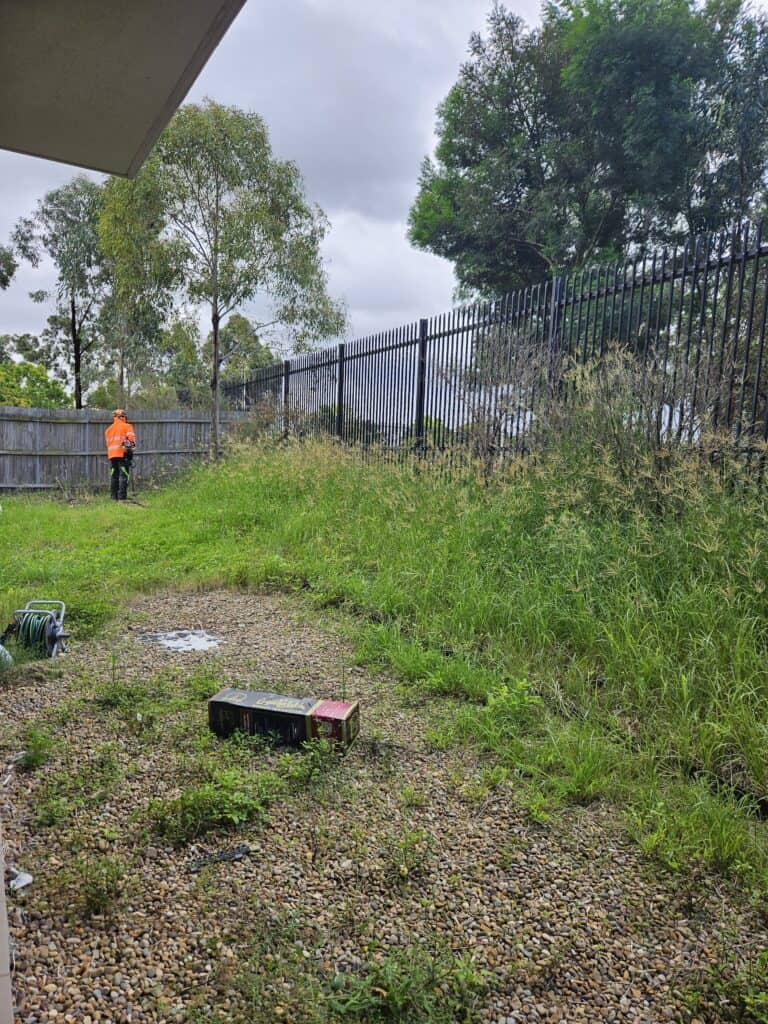
A real ASET bamboo eradication programme on a Western Sydney property u2014 running bamboo, neighbour boundary, 18-month timeline. What it took to fully remove.